
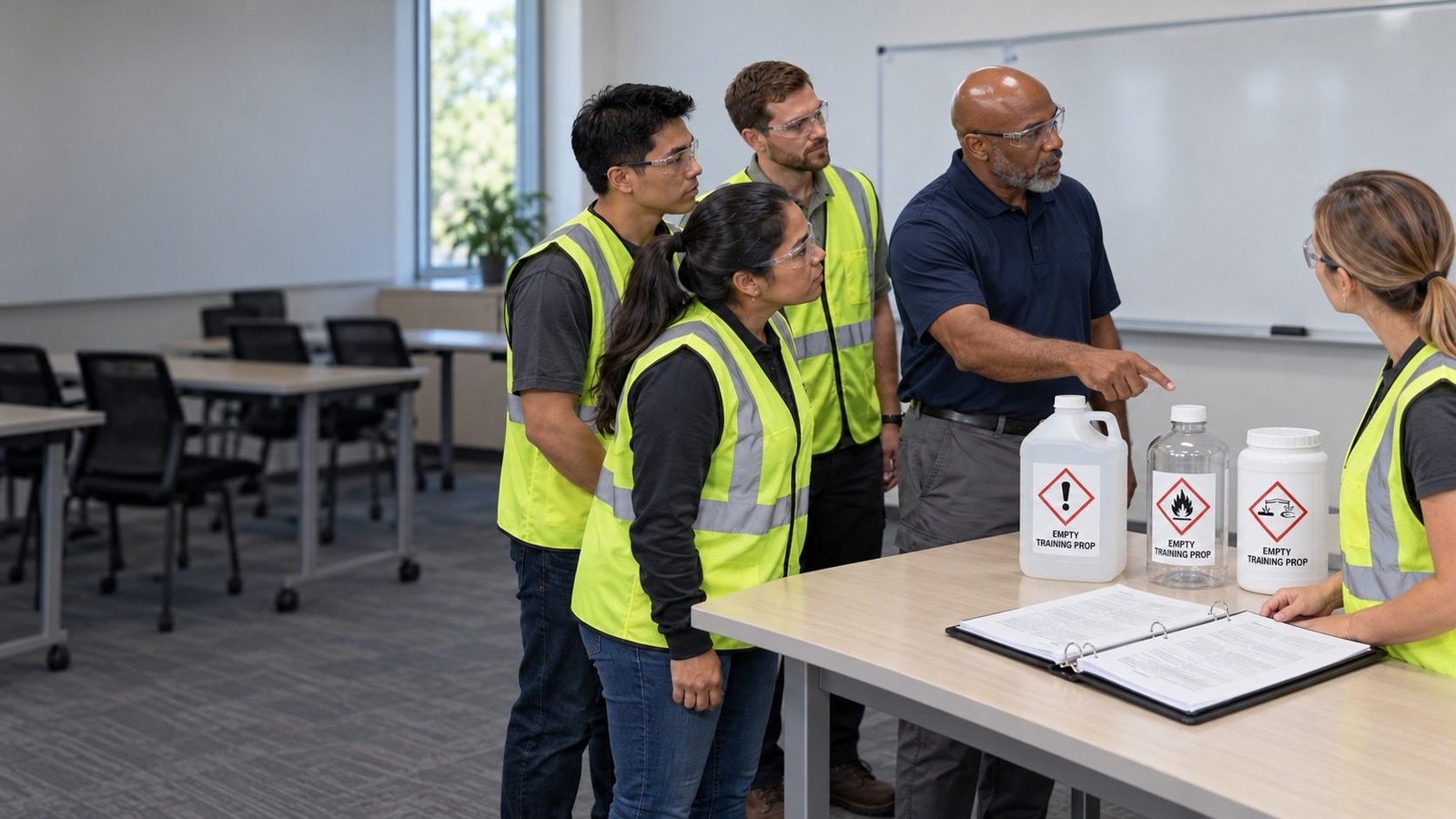
Hazard Communication HazCom
Employees who may be exposed to hazardous chemicals at work, and supervisors responsible for the hazard communication program.
At a glance
The facts, up front.
- What you receive
- Tenet certificate of completion. A TENET STANDARD certificate and roster documenting who was trained, on what, when, and by whom. It is a training record, not an OSHA or Department of Labor credential.
- Length
- Set in your proposal.
- Format
- On site or live virtual.
- Class size
- Set in your proposal.
- Hands-on
- Using your workplace labels and safety data sheets to identify hazards and select protective measures.
- Who it is for
- Employees who may be exposed to hazardous chemicals at work, and supervisors responsible for the hazard communication program.
What it covers
In the room.
- The Hazard Communication Standard, 29 CFR 1910.1200, and your written program
- Locating and accessing the written program, chemical inventory, and safety data sheets
- GHS labels, pictograms, and signal words
- Reading a safety data sheet section by section
- Physical and health hazards of the chemicals at your site
- Recognizing a chemical release through monitoring, appearance, or odor where appropriate
- Workplace labeling, safe work practices, emergency procedures, and personal protective equipment
- Protective measures and what to do after an exposure
Booking
How it gets scheduled.
- Send a proposal request with the course, headcount, and target date.
- Sign the service order.
- Your class date is confirmed in writing.
Good to know
OSHA requires hazard communication training at initial assignment and whenever a chemical hazard employees have not previously been trained about is introduced into their work area. We tailor training to your chemical inventory, safety data sheets, and workplace procedures.
Let's get to work
Book
Hazard Communication.
Tell us the headcount, the location, and the date you need. You get scope, schedule, and price in a written proposal.