
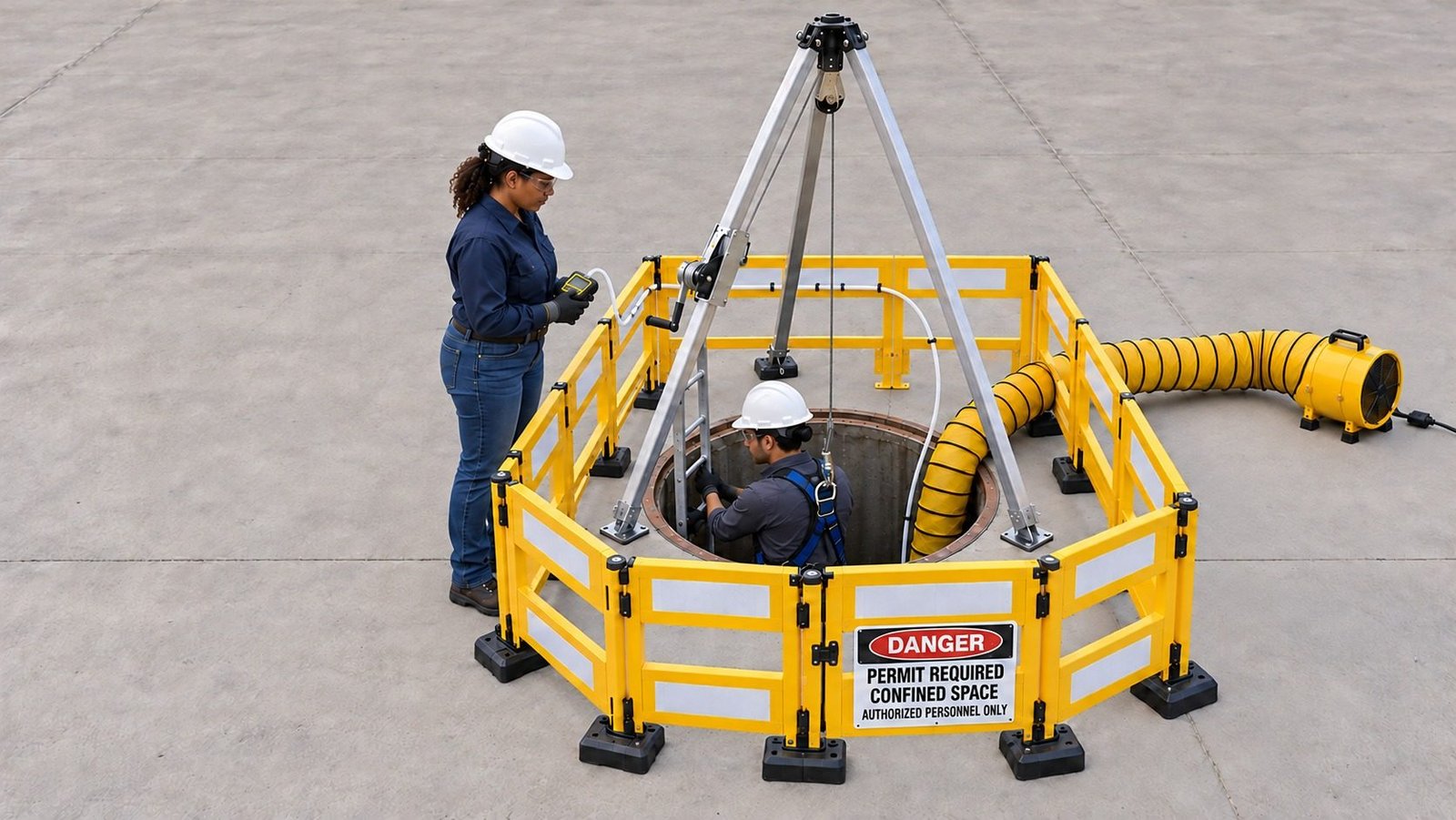
Confined Space Entry and Rescue
Entrants, attendants, entry supervisors, and rescue teams for permit-required confined spaces.
At a glance
The facts, up front.
- What you receive
- Tenet certificate of completion. A TENET STANDARD certificate and roster documenting who was trained, on what, when, and by whom. It is a training record, not an OSHA or Department of Labor credential. OSHA does not issue a confined space card.
- Length
- Set in your proposal.
- Format
- On site, with your spaces, permits, and equipment.
- Class size
- Set in your proposal.
- Hands-on
- Atmospheric testing, permit completion, retrieval equipment, and a practice rescue.
- Who it is for
- Entrants, attendants, entry supervisors, and rescue teams for permit-required confined spaces.
What it covers
In the room.
- Recognizing permit-required confined spaces on your site
- Entrant, attendant, and entry supervisor duties
- Atmospheric testing for oxygen, then flammables, then toxics, before and during entry
- Entry permits, isolation, and lockout
- Ventilation and continuous monitoring
- Non-entry retrieval and rescue planning
Booking
How it gets scheduled.
- Send a proposal request with the course, headcount, and target date.
- Sign the service order.
- Your class date is confirmed in writing.
Good to know
Confined spaces fall under 29 CFR 1910.146 in general industry and 29 CFR 1926 Subpart AA (1926.1200 to 1926.1213) in construction. Each role is trained before it is assigned, and again when duties change, a new hazard appears, or entry procedures are not followed. Rescue teams practice a permit space rescue at least once every 12 months. Tenet provides the training and the records. The employer certifies it.
Let's get to work
Book
Confined Space Entry and Rescue.
Tell us the headcount, the location, and the date you need. You get scope, schedule, and price in a written proposal.